A campaign from Starling caught my attention this week.
Not because it announced a new feature. Not because it promised to revolutionise SME banking with AI. And not because it offered a market-leading rate.
It stood out because it felt like a sign of a broader shift in how digital products and services can be positioned.
Financial services marketing is often a mix of features, rates, and brand aspiration. On any given day you’ll see a stream of announcements about AI-powered assistants, AI insights, AI recommendations and AI-driven experiences. The technology is advancing rapidly and many of these innovations are genuinely valuable.
But for most customers, AI is not the thing they are buying.
The customer is trying to save time. Reduce admin. Feel more in control. Make better decisions. Grow their business. They care about outcomes, not the technology stack sitting behind them.
As more providers compete on increasingly similar AI narratives, I suspect many customers are becoming AI blind. Not hostile. Not dismissive. Just indifferent. The claims begin to blur together.
And who can blame them?
At BehindLogin, we spend our time analysing digital experiences behind the login. We regularly see a gap between the story being told publicly and the reality customers encounter once they start using a product. That doesn’t mean providers are being disingenuous. It simply reflects the challenge of communicating complex capabilities in a simple way.

What I like about Starling’s campaign
Rather than leading with AI, it leads with the customer. Rather than championing a single feature, it focuses on the wider experience. Rather than relying on rates or brand sentiment, it uses the customer’s perspective to illustrate value.
The campaign feels less concerned with explaining the technology and more concerned with showing the impact.
The message isn’t “look what our AI can do”.
It is closer to “look how we’re helping businesses run more effectively”.
I truly believe that this distinction matters.
When customer understanding, data intelligence, assistive tools and joined-up experiences work together, the value becomes much easier to believe. So whether AI is powering part of that experience almost becomes secondary. The customer sees the outcome rather than the mechanism.
And that outcome is where trust starts to form.
All very relevant at a big time of switching
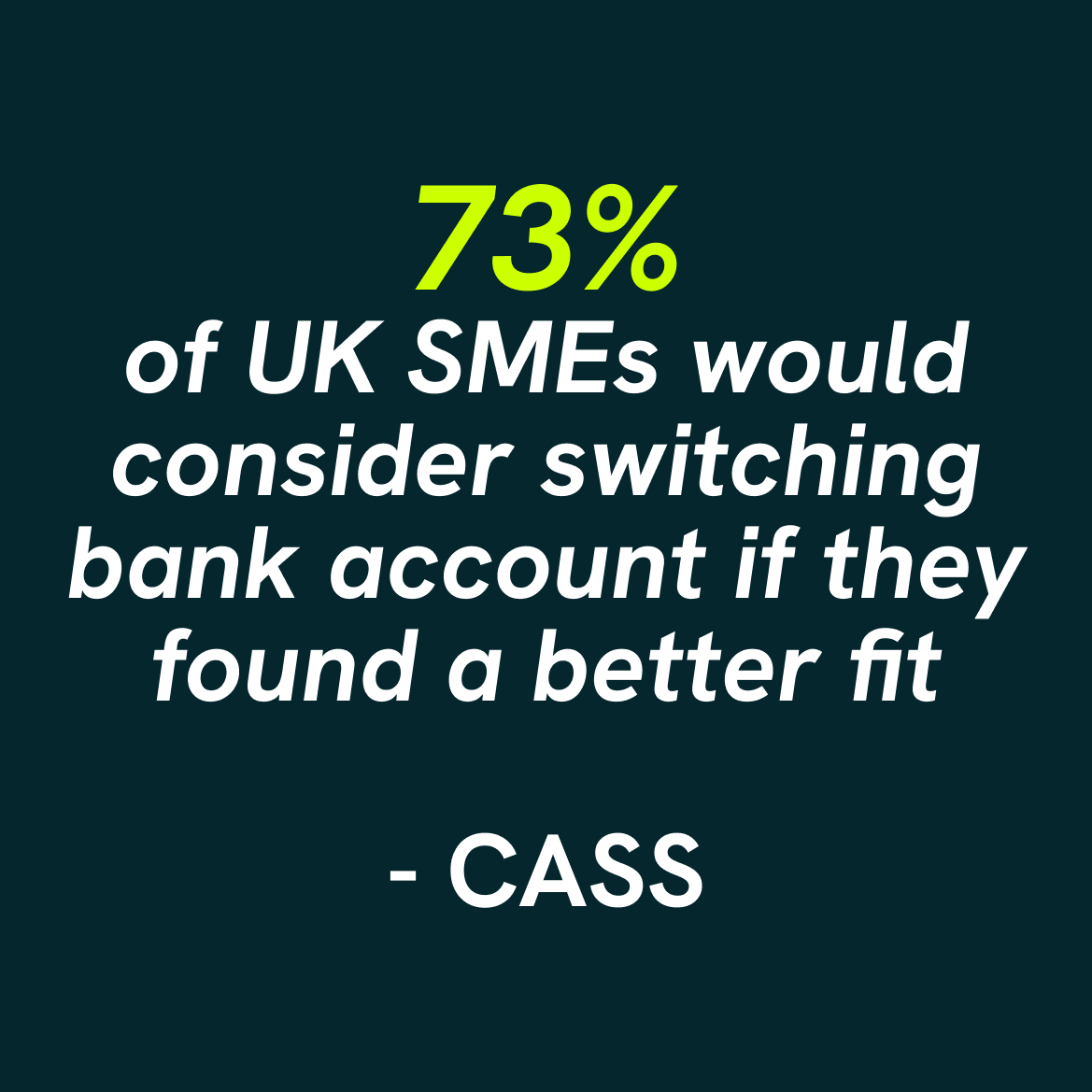
According to the Current Account Switch Service, 73% of UK SMEs would consider switching bank account if they found a better fit. Meanwhile, current account switches across personal and business banking increased by 43% year-on-year between Q1 2025 and Q1 2026.
Customers are willing to move.
The challenge goes beyond attracting attention. It’s creating enough confidence that someone decides to switch, and then delivering enough value to make them stay.
Winning a customer with a compelling proposition is one thing. Retaining them requires the experience to continually demonstrate its worth. The relationship is of course built through hundreds of small interactions over time, not a single marketing message.
This is where I think we’ll see more providers evolve their positioning.
Less emphasis on individual features. Less emphasis on technology for technology’s sake. More focus on how products support customers, learn from behaviour, surface relevant information, and help people build better habits.
In many ways, this reflects what we consistently see in our own research.
The strongest digital experiences rarely win because of one standout feature
They win because a collection of capabilities work together to create an experience that feels useful, relevant and trustworthy.
This is much harder to communicate than a feature announcement. But it’s also much harder for competitors to replicate.
Providers such as Starling, Monzo and Revolut have helped raise expectations for what good digital experiences can look like. As switching continues to rise and customer expectations continue to evolve, I suspect we’ll see more providers move towards solutions that reflect the voice of the customer, demonstrating a deeper understanding of the challenges they face and the outcomes they’re trying to achieve.
For customers, that’s a positive shift.
For product teams, it’s a reminder that customers don’t reward the most sophisticated technology. They reward the providers that understand them best and consistently deliver on that understanding.
Less claims. More conviction.
It feels like a healthier direction for the industry.