Most organisations try to reduce churn.
The best digital products focus on something else entirely.
They help customers succeed.
Churn is rarely the problem. It’s usually the result of customers failing to achieve what they came to do.
Customers don’t open an app because they want to use a feature. They open it to solve a problem, complete a task or make progress towards a goal. The easier it is to achieve that goal, the more likely they are to return.
This is an important shift in perspective.
Instead of asking, “How do we reduce churn?”, ask, “How do we help customers succeed sooner?“
Every business metric starts with a customer experience
Business outcomes don’t happen in isolation.
Engagement, retention, revenue and advocacy are all shaped by the experiences customers have every time they interact with a product.
When customers struggle to complete a task, lose confidence or fail to see value, the impact doesn’t stop there. Lower engagement becomes higher churn. More confusion becomes more support calls. Missed opportunities become slower growth.
The business experiences the outcome, but the customer experiences the cause.
Great products remove reasons to leave
The strongest digital products rarely rely on loyalty schemes, reminders or clever retention tactics.
Instead, they remove the reasons people leave in the first place.
1. Make it obvious where to start
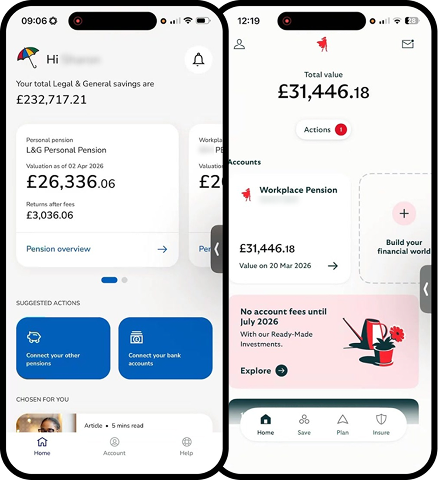
L&G makes it immediately obvious where to start by prioritising two high-contrast calls to action: Connect your other pensions and Connect your bank accounts. Both expand the customer’s financial picture, increasing the value they receive from the app while encouraging long-term engagement.
Scottish Widows positions fee-free, ready-made investments as the primary call to action. By reducing the effort and uncertainty of choosing investments, it helps customers take their first step with confidence.
2. Guide customers through complex tasks
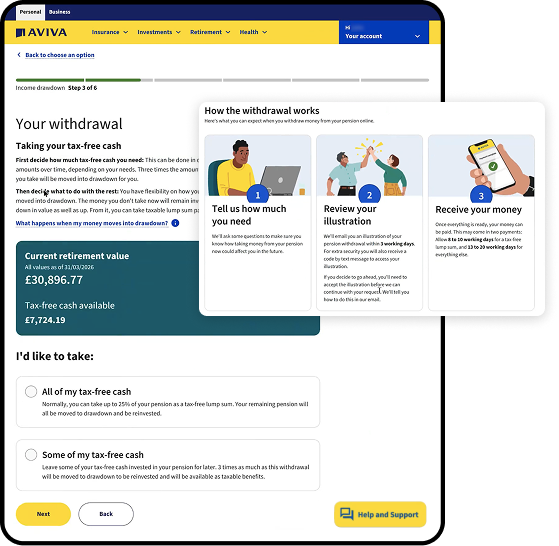
Aviva breaks a complex drawdown journey into manageable steps, helping customers understand what to do and building confidence throughout.
- Provides upfront context, explaining what’s required and what to expect.
- Makes progress visible with both a progress bar and step labels.
- Uses plain English and large, clearly labelled options to simplify decisions.
- Reduces uncertainty with in-line guidance, tooltips and highlighted information.
- Keeps help within easy reach through a persistent support button.
One notable exception is the nav controls. Placing the primary Next action on the right and the secondary Back action on the left would better align with established web conventions and reinforce the customer’s natural progression through the journey.
3. Explain what’s happening
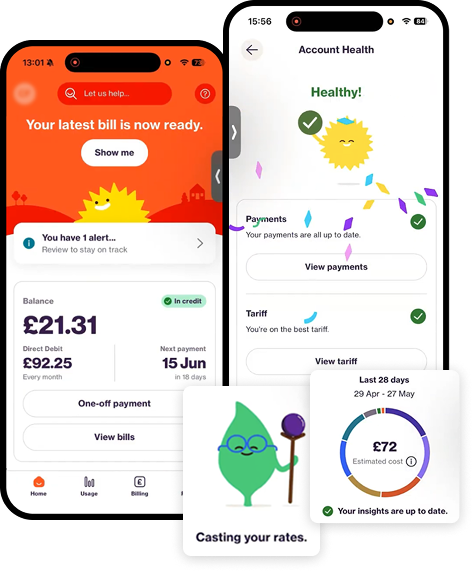
E.ON Next keeps customers informed throughout the experience, reducing uncertainty by clearly communicating both account status and system status.
- Confirms important account updates, such as when a new bill is ready or an alert needs attention.
- Keeps customers informed with a live view of their balance, credit status, Direct Debit amount and upcoming payment date.
- Provides an account-wide health check with a subtle confetti animation, confirming that everything is on track.
- Explains what’s happening behind the scenes, using messages such as “Calculating your rates” during loading screens.
- Reassures customers when information is current, for example by confirming that insights are up to date.
4. Reassure people when confidence matters
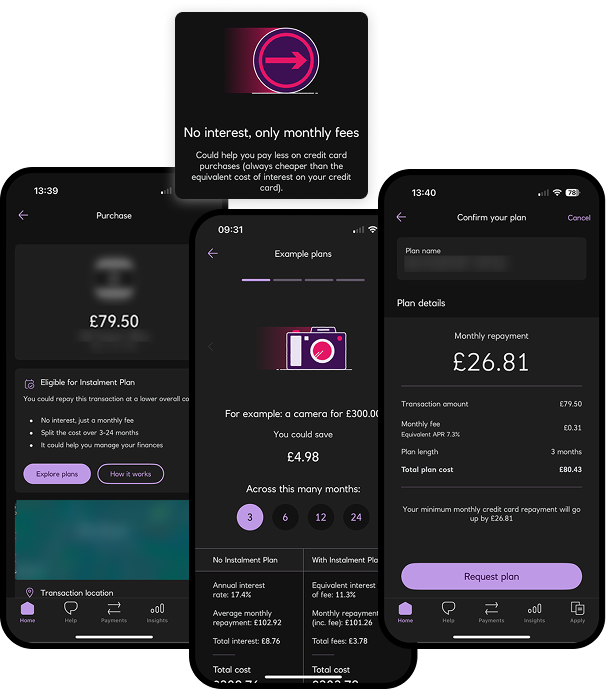
NatWest’s iPlan setup helps customers make important financial decisions with confidence by providing clarity before, during and immediately before commitment.
- Explains investment risk upfront using clear, plain English.
- Highlights key considerations to support informed decision-making.
- Provides editable example plans, allowing customers to explore different outcomes before committing.
- Shows a preview of the customer’s investment plan before they commit.
5. Help customers see their progress
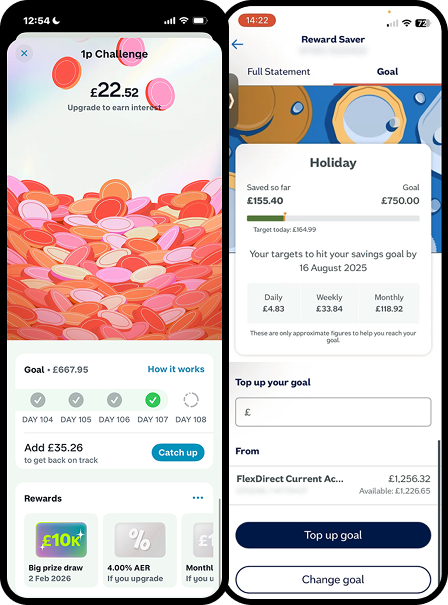
The best digital products make progress visible, helping customers recognise progress and stay motivated to continue.
- Monzo shows customers how far they’ve come and what they’ve achieved.
- Nationwide uses savings projections to make future outcomes tangible, encouraging customers to take action today.
Whether it’s opening a bank account, managing a pension, booking travel or collaborating with colleagues, the pattern is remarkably consistent.
Products that help customers succeed create customers who return.
Learn from patterns, not competitors
Most organisations understand their own customer journeys.
Fewer understand how the best digital products solve the same problems.
The goal isn’t to copy features or interfaces. It’s to recognise the approaches that consistently help customers make progress.
- How do leading products reduce uncertainty?
- How do they simplify decisions?
- How do they build confidence?
- How do they make the next step feel obvious?
Looking beyond your own product, and often beyond your own industry, reveals ideas that are difficult to discover in isolation.
Better questions lead to better products
When reviewing an important customer journey, ask:
- What is the customer trying to achieve?
- Where do they hesitate or lose confidence?
- What’s stopping them from succeeding today?
- How have other digital products solved the same problem?
- What could make this journey simpler, clearer or more reassuring?
The answers often reveal opportunities that feature requests never will.

Business outcomes are created by customer experiences.
Help customers succeed sooner.
And retention will take care of itself.
This article is the first in our WHAT WORKS series, revealing the product approaches that drive measurable business outcomes. Sign up to our Insight Digest newsletter to receive future articles straight to your inbox. (Scroll down to the lime green section.)