International expansion is often framed as a market-entry challenge. Which country should we enter? How big is the opportunity? What licences do we need? Who should we partner with?
All important questions. And for fintechs, there is another that matters just as much.
Will the product actually work in the market you are entering?
Not just technically or from a regulatory perspective, but for the customers who will use it. Will it fit the way people already behave, the terminology they understand and the expectations local competitors have already created?
Entering a new market is one thing. Getting the product to cross the border with you is another.
A good product doesn’t automatically travel well
This is particularly true in financial services.
Customers in different countries may have the same underlying needs, but the products, processes and behaviours around those needs can vary significantly.
People still need to spend, save, borrow and plan for retirement. Businesses still need to manage expenses and payments. But the journeys they are used to, the language they understand and the products they trust can look very different.
That is why international expansion cannot simply mean taking a successful proposition, switching currencies and adapting the copy.
The product needs localising too.
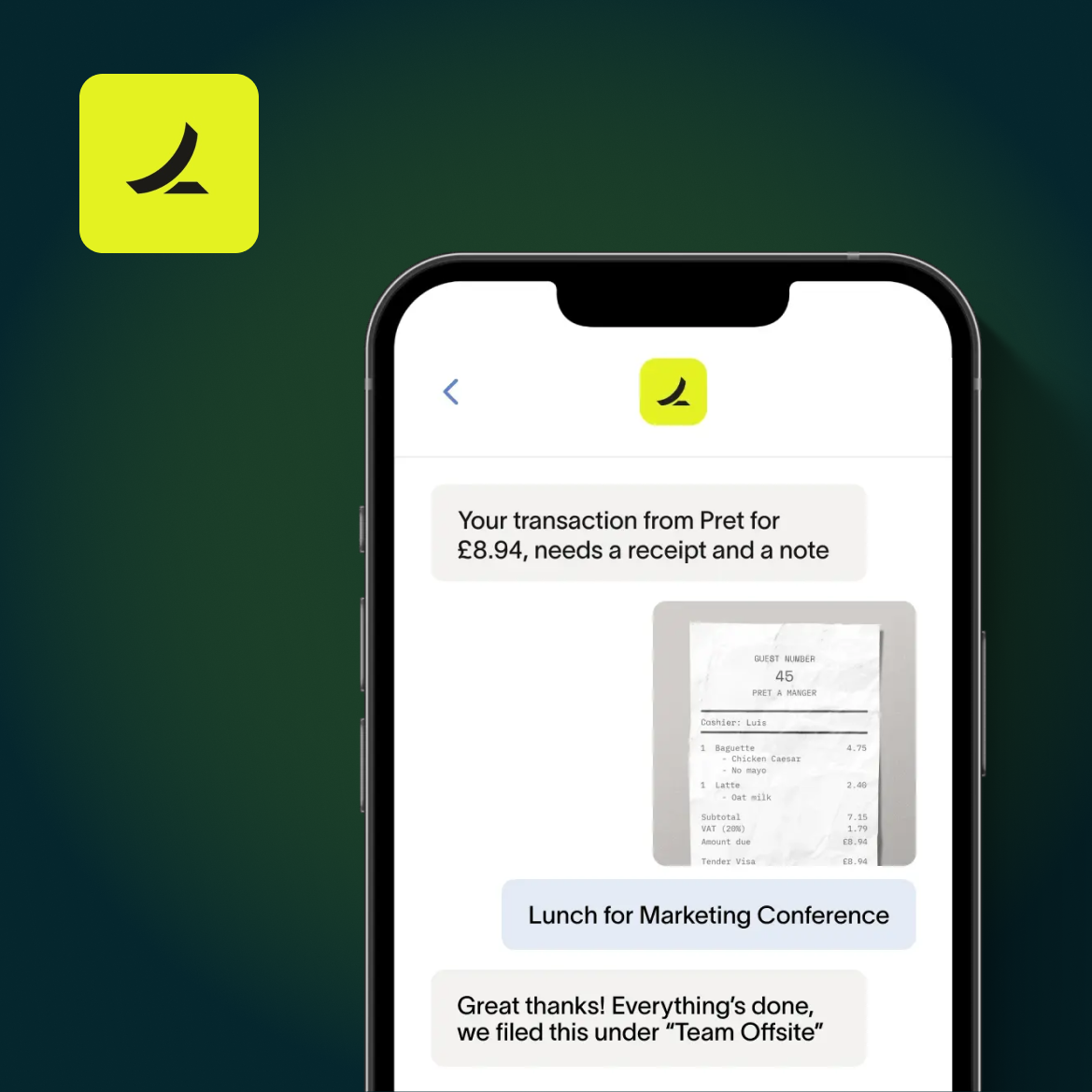
Ramp is taking a deliberately local approach to the UK
Ramp provides a useful recent example.
The US fintech launched in the UK in September 2026, its first market outside North America, but it did not simply bring its existing product across the Atlantic unchanged.
Ramp spent the summer working with UK beta customers across areas such as expenses, bill payments and accounting, with feedback helping shape the product it launched.
It has also invested in local infrastructure. Its acquisition of Billhop gave it payments authorisation in the UK and EU, alongside established teams in London and Stockholm.
Partnerships and acquisitions can solve major parts of international expansion, from regulation to infrastructure, but you also need to understand the local customer experience.
- What do customers expect?
- Where do incumbent journeys create friction?
- Where is there genuine room to differentiate?
Monzo shows that international expansion also means knowing where to focus
International expansion is often treated as inherently positive. More markets means more growth. But good international strategy also means knowing where to concentrate resources.
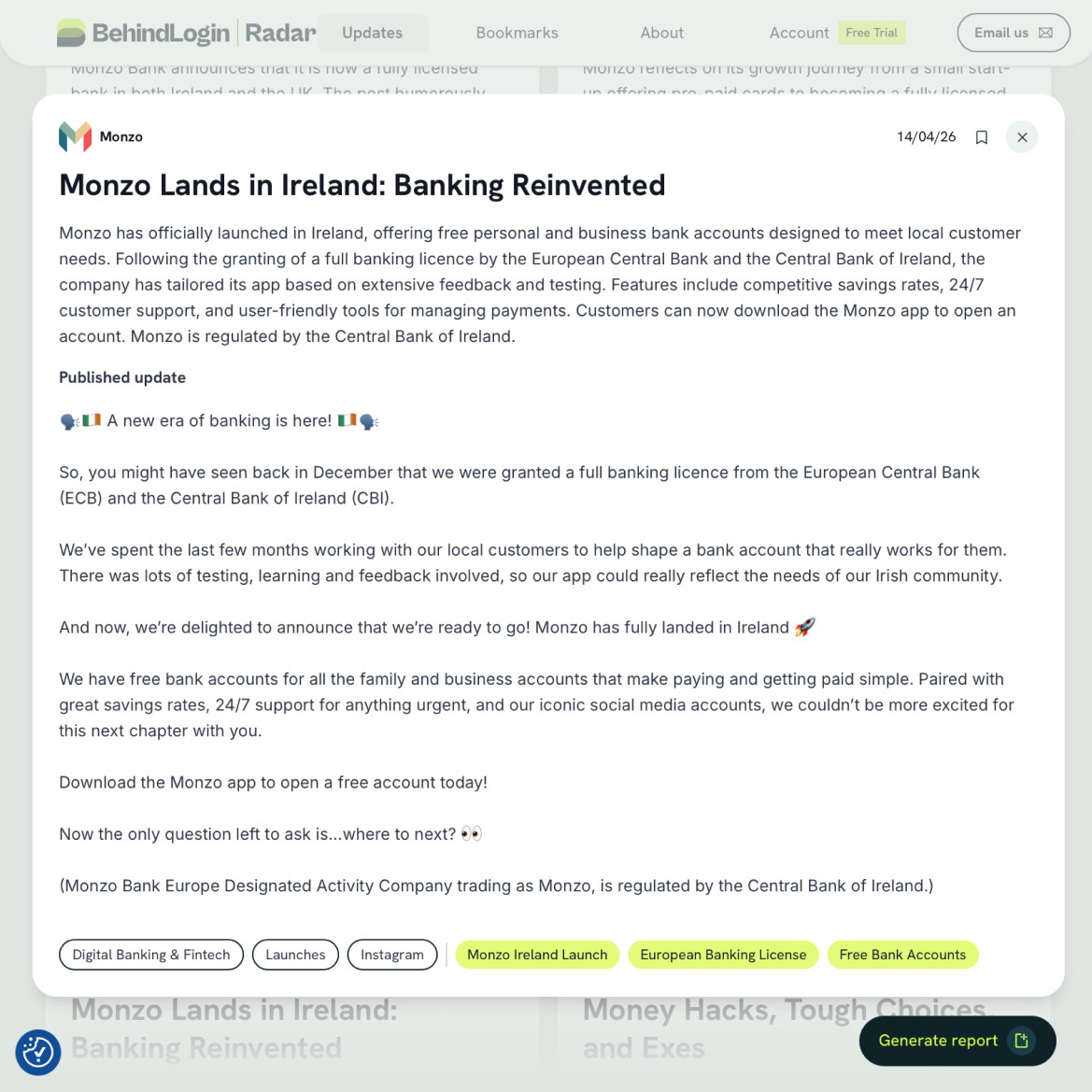
After operating in the US for several years, Monzo closed its remaining US customer accounts this year and shifted its international focus towards Europe, starting with a Spring launch in Ireland. The shift allows the leading back to leverage a newly secures European banking license.
Market announcements tracked through Radar, our competitor listening tool, speak of the testing, learning and feedback involved, so Monzo’s app could really reflect the needs of the Irish community.
A mix of the right operating model, regulatory footing and local product fit give the fintech a credible reason to win.
PensionBee translated UK expertise into the US retirement market
PensionBee provides a useful example of the product challenge involved in international expansion.
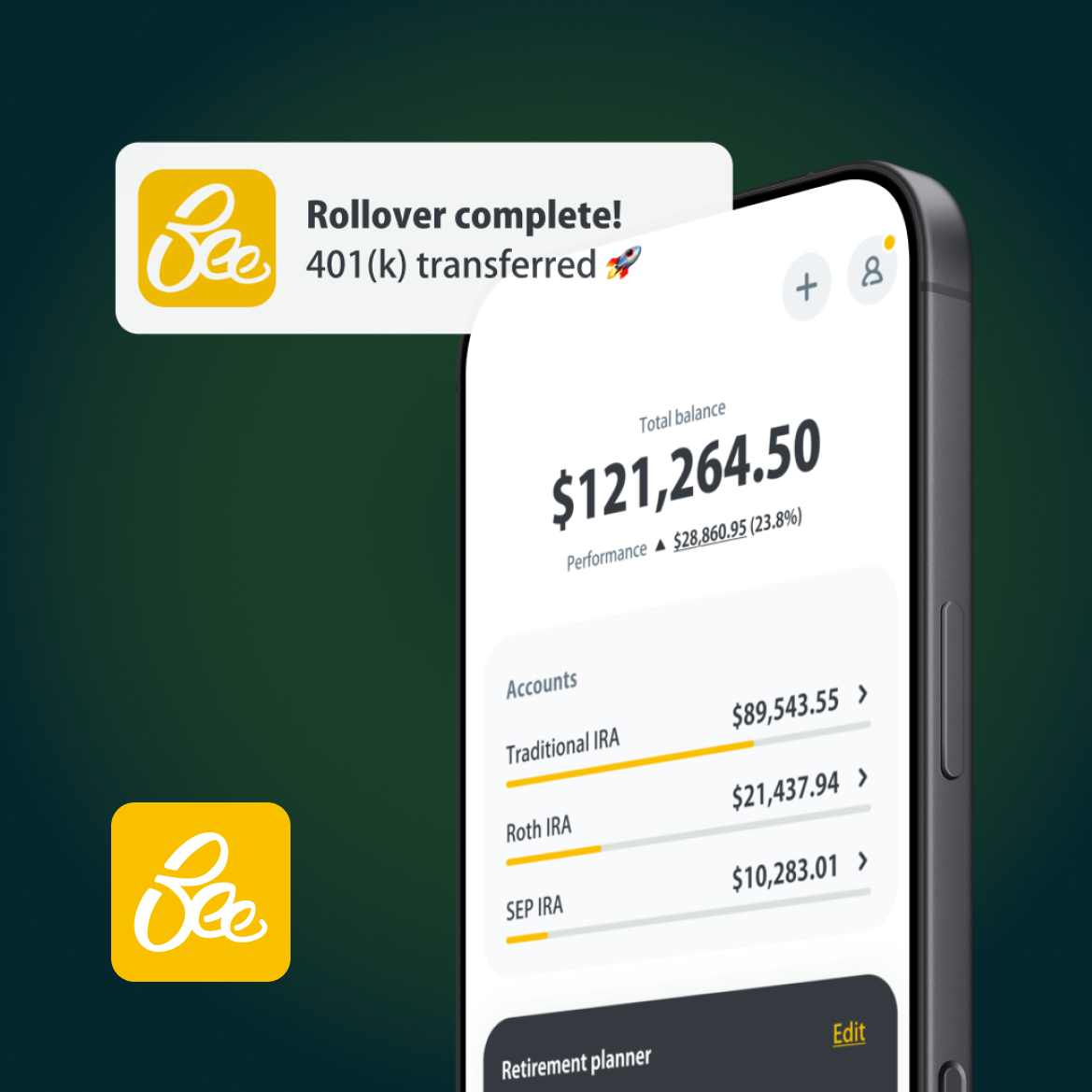
After a decade building a leading position in the UK digital pensions market, PensionBee expanded into the US retirement market with an established understanding of how to make pensions simpler and more accessible for customers.
The challenge was translating that expertise into a very different retirement landscape.
The underlying customer need may be familiar, but the products, terminology and journeys are not. In the US, 401(k)s, IRAs and different incumbent behaviours create a different set of customer expectations.
As part of that expansion, we worked with PensionBee to build a clearer picture of how 401(k) rollover journeys actually worked across leading US providers, including how easy they were to find, what information customers were asked for and where incumbents introduced friction or attempted to retain assets.

Much of the experience sits behind the login
With much of the competitor insight sitting within logged in user experiences, this couldn’t be understood through public competitor research alone.
BehindLogin recruited US consumers with eligible retirement accounts and observed them completing real rollover journeys across leading providers, stopping immediately before submission.
We captured the screens, information requirements, terminology, areas of uncertainty and retention interventions, allowing those journeys to be compared side by side.
That gave PensionBee a clearer view of the product environment it was entering: not simply who the competitors were, but how their products actually worked.
Localisation goes deeper than language
International expansion is usually discussed in terms of regulation, licences, distribution and partnerships. Those are essential, but localisation also happens inside the product.
It is in the questions customers are asked, the way decisions are explained and the points where a journey creates reassurance or friction.
These are not cosmetic differences. They shape whether a proposition feels intuitive, unfamiliar or difficult to use.
Understand the market behind the login
Ramp, Monzo and PensionBee illustrate three different approaches to international expansion.
- Ramp shows the value of building locally from the outset.
- Monzo shows the importance of being selective about where to focus.
- PensionBee shows how established expertise can be adapted for a market with very different products, journeys and customer expectations.
Across all three, market entry is only part of the challenge.
For financial products, much of what shapes customer behaviour sits within the experience itself: the journeys people follow, the terminology they encounter and the way incumbents make complex tasks easier or harder.
Understanding that experience gives a much clearer view of the market you are actually entering. Because going global is not just about taking the business across the border. the product has to cross it too.