Meta wants Muse to become a companion for everyday life
One that knows you, helps you make decisions and increasingly takes action on your behalf.
Meta launched Muse this month as a personal AI agent that can browse websites, fill in forms, negotiate, shop and complete tasks for you. It remembers information you’ve shared and can proactively suggest what to do next.
Meta is also making that relationship physical.
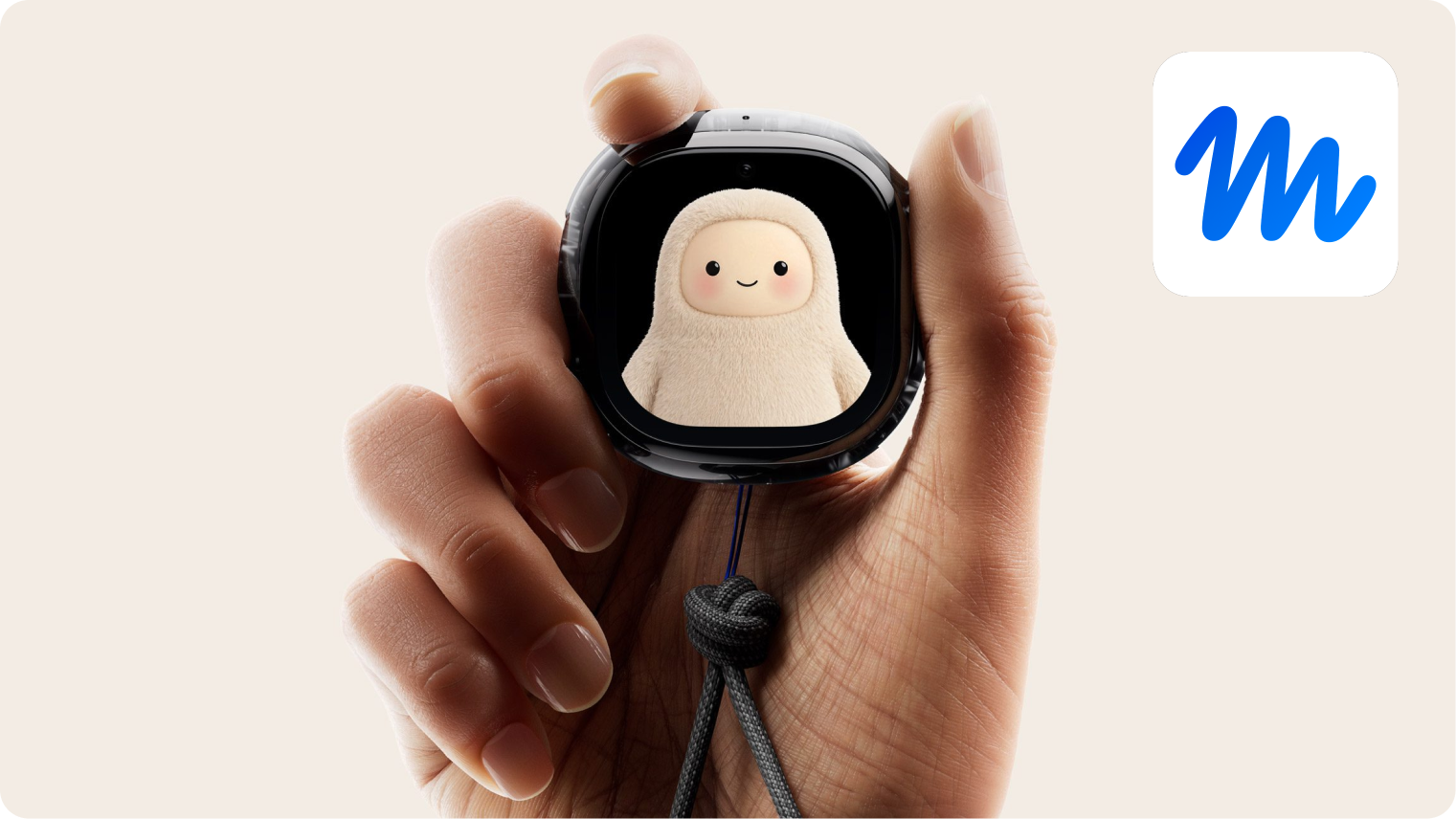
At Meta Connect, it has now unveiled Muse Charm, a playful keychain-sized device featuring a customisable Muse character you can talk to throughout the day.
An AI agent can sound technical and abstract. Give it a character, a voice and something you carry around, and it starts to feel much more like a companion.
But behind that friendly character sits an increasingly powerful capability. Muse can spend your money.

From conversation to payment
Meta has integrated Muse with Stripe’s Link.
Customers can connect their Link account and allow Muse to make purchases on their behalf. Where Link isn’t accepted, it can generate a single-use virtual card for an approved transaction. The customer approves the purchase, while Muse doesn’t see their underlying card details.
Meta has also announced integrations with Shop Pay and PayPal.
So this isn’t unrestricted access to your bank card. There are controls around the transaction.
But a journey that previously required you to find a product, visit a website, navigate checkout now moves to “Find this for me and buy it.”

How far could a financial companion go?
Meta is already promoting Muse’s ability to negotiate bills, cancel subscriptions, find refunds and identify ways to save money.
A few directions this could go:
“Find me cheaper car insurance.”
“Cancel the subscriptions I don’t use.”
“Move £200 into my savings.”
“Find somewhere better for this cash.”
Muse can’t freely execute all of these today, and financial products bring very different regulatory and authentication requirements.
But this is certainly the direction of travel, competing with ChatGPT & Claude to be the primary interface for managing your financial life.
The bank, insurer or investment platform might still hold the account, money and regulated relationship, while AI companions are set to increasingly nibble away at the interaction.

Amazon has already said no to Muse
Not everyone wants someone else’s AI inside their customer experience.
Amazon has blocked Muse from accessing its marketplace, arguing that businesses should be able to decide whether third-party agents can access their services.
There’s a commercial dimension too. An AI selecting products for customers could potentially bypass Amazon’s recommendations, advertising and interface.
But the disagreement raises a bigger question for financial services:
But is this in the customer’s interests?
Who should decide whether an AI agent can act on a customer’s behalf?
If I authorise Muse to interact with my bank or insurer, should that company have to accommodate it? Or can it say it doesn’t recognise that intermediary?
Amazon has taken the lead and drawn that boundary in retail. Equally, financial services may eventually have to draw its own.

When a companion becomes an agent
How does the Muse Charm build on its positioning?
The visual language says companion, something you might have an emotional attachment with.
This is significant when the agent can take consequential actions on your behalf, particularly if this type of experience appeals to younger users.
There’s no evidence that Muse Charm is specifically marketed to under-18s, or that Muse enables children to autonomously make payments.
But its playful, Tamagotchi-like design undoubtedly looks like a toy. If it talks like a friend and can ultimately act with your money, how visible should the boundary be between conversation and future transactions?
Not all friction is bad UX
We spend a lot of time helping companies to remove friction from digital experiences. Usually that’s a good thing.
And the designers of Muse describe how this gives us back the scarcest thing we have: time with the people we love
But we’ve said it before and will say this again. Authentication, confirmation screens, disclosures and cooling-off periods can make financial journeys longer for a reason. They create a moment between intention and action.
An AI companion potentially compresses many of those steps into “sort this out for me.”
When designing a stripped back UX that competes with emerging AI capabilities, providers are increasingly exploring which friction we can safely remove and which friction is actually protecting the customer.
Are providers ready for financial companions?
Without differentiation and AI adoption within our core financial products, our banks, insurers or investment platforms may lose contact with the layer where customers ask questions, make decisions and initiate actions.
So two big questions will be sitting with financial services product teams:
How do we build the best AI enabled experience for our customers?
And what happens when your customer sends their financial companion instead?