
Starling’s founder is back with Lockwood, a new banking venture that could change how we interact with our money. But what happens when AI starts managing it for us?
Anne Boden is back.
The founder of Starling Bank, one of the UK’s most successful digital banking challengers, has unveiled plans for Lockwood, a new banking concept built around artificial intelligence.
But rather than launching another challenger bank with a better app, Boden is betting on something rather different.

A future where AI agents manage our money on our behalf
Lockwood plans to enable customers to authorise AI assistants to carry out everyday financial tasks, from paying bills and buying groceries to managing subscriptions, within spending limits and permissions set by the customer.
Boden describes the ambition as creating a bank “built by agents, to serve customers that want to use agents, and then be defended by agents.”
The venture is initially self-funded, with plans to secure an electronic money institution licence in 2027, followed by a full banking launch in 2028. Boden is targeting one million customers in its first year.
Ambitious? Absolutely. But Anne Boden has successfully rethought banking before. Now she’s setting out to do it again.
From digital banking to agentic banking
For the past decade, financial services providers have competed to make their apps the easiest place to manage money.
Better navigation. Smarter insights. Faster payments. More personalised experiences.
But the relationship between customers, their apps and their money could be about to change.
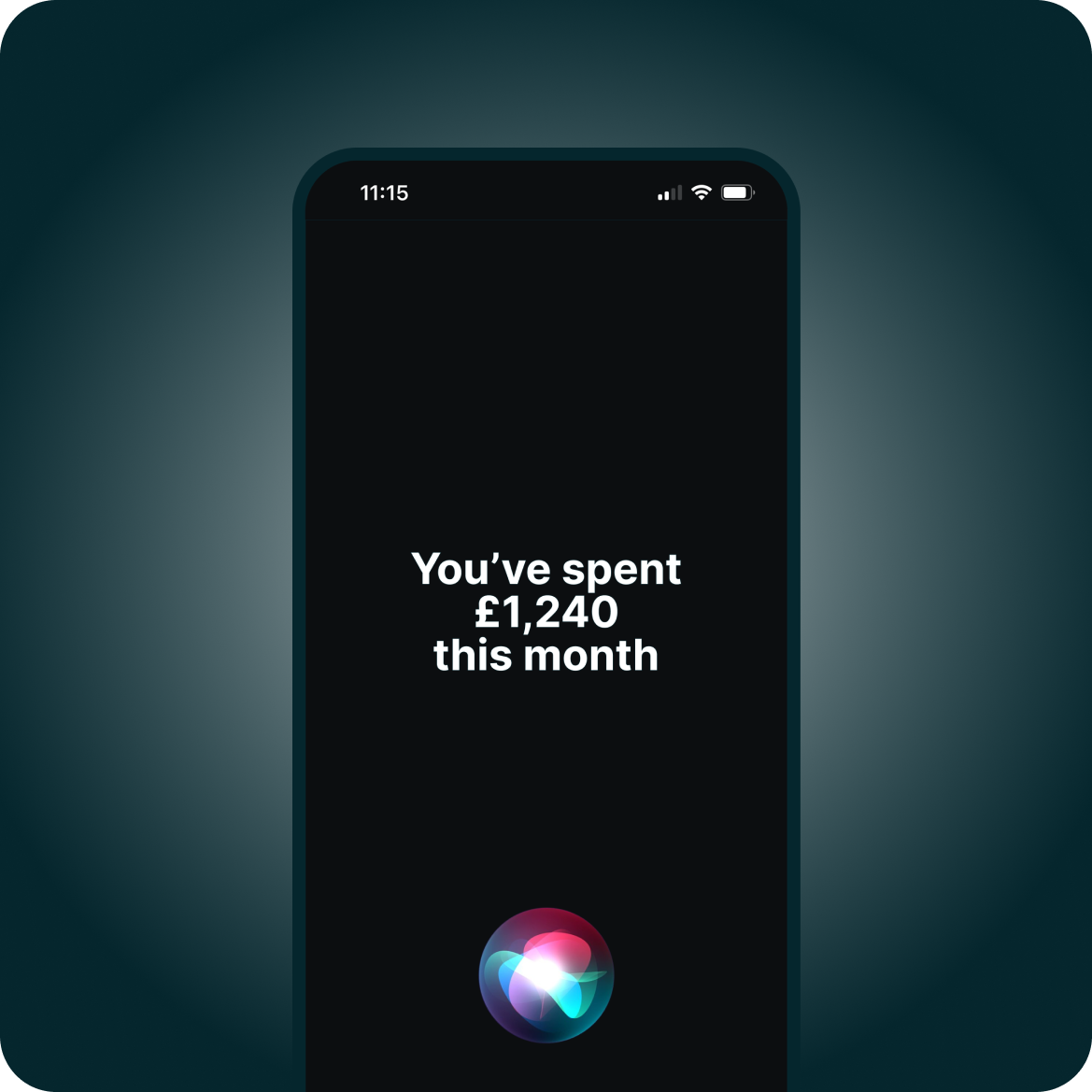
Apple’s recent developments with Siri point towards a future where customers can access financial information and complete tasks without opening their banking apps.
And things are moving quickly.
Just days before Lockwood’s announcement, OpenAI introduced ChatGPT Wallet, developed with American Express, Chase, Mastercard and Visa, enabling AI agents to complete purchases on behalf of customers using their existing payment cards.
Initially, customers must approve each transaction, but OpenAI is already exploring a future where agents can make purchases within predefined spending limits and permissions.
Together, Siri and ChatGPT Wallet offer a glimpse of how AI assistants could become the interface through which we access and transact with financial services.
Meanwhile, Lockwood is proposing to build an entire bank around this emerging model.
Lockwood’s ambition extends to making it possible for customers to safely delegate financial decisions and actions to AI.
That raises a range of practical, commercial and ethical questions. Starting with customer control.

Who’s in control?
Imagine having several AI agents managing your subscriptions, shopping and finances, even moving money between accounts.
How do you know what each can access, how much they can spend and what happens when you change your mind?
Lockwood’s approach puts customer-defined permissions and spending limits at the heart of the proposition.
But the real test comes when things don’t go quite to plan.
What happens when an agent encounters an unexpected charge, misunderstands an instruction or recommends something completely out of character for the customer?
And how quickly can someone intervene, change their instructions or reverse an action?
These are fascinating challenges for product teams. How do you make customers feel comfortable delegating financial tasks while giving them the confidence that they can understand, influence and reverse what’s happening?
And managing one agent is relatively straightforward.
But what happens when we’re using multiple agents across different financial providers and digital services?
We hear plenty about AI governance at an organisational level, but what about our own?
Perhaps we’ll see a personal AI control centre, giving us one place to manage permissions, monitor activity and stay in control.
And with the tech giants likely competing to own this experience, who will ultimately control the controls?
There’s a commercial question, too
Lockwood’s proposed business model is also interesting.
According to reports, it intends to offer a current account without lending or savings products, generating revenue through interest earned on customer deposits rather than service fees.
It’s a different proposition from many established banking models, and raises questions about where the value in agentic banking will ultimately sit.
- If AI assistants become the main interface through which customers manage their finances, what happens to the banks and financial providers underneath?
- Will banking products increasingly compete on their ability to work with third-party agents?
- And who captures the commercial value of that customer relationship: the provider holding the money or the agent helping the customer decide what to do with it?
Lockwood has the advantage of designing its proposition around these emerging behaviours from the outset.
But even for a bank built specifically for agents, the relationship between the financial provider and the customer’s chosen AI assistant will be an important one to get right.

What does this mean for the next generation of banking experiences?
Many of the product teams we speak with have more questions than answers at this stage.
- What role does their app play?
- Who owns the customer relationship?
- What does a good experience look like?
We’ve all spent years making journeys easier for customers to complete themselves.
Perhaps the next challenge is designing experiences that customers feel confident delegating, while retaining the ability to understand, influence and control what happens.
That means thinking carefully about the moments when an agent needs clarification, when a customer wants to intervene and how the experience builds confidence over time.
There’s a significant product design challenge in making delegation feel safe, understandable and reversible.
Of course, Lockwood is still a proposition
We haven’t seen how its customer experience works in practice, whether consumers will embrace it or how its approach will compare with the capabilities emerging from existing banks and technology platforms.
One thing we know is that Starling helped redefine banking for the smartphone era and now Anne Boden is setting out to do the same for AI agents.
She’s already proven her ability to reshape the market, and Lockwood could be another significant step forward, presenting a new opportunity for others to innovate alongside her.
For anyone designing financial services experiences, what does the future of customer control look like?